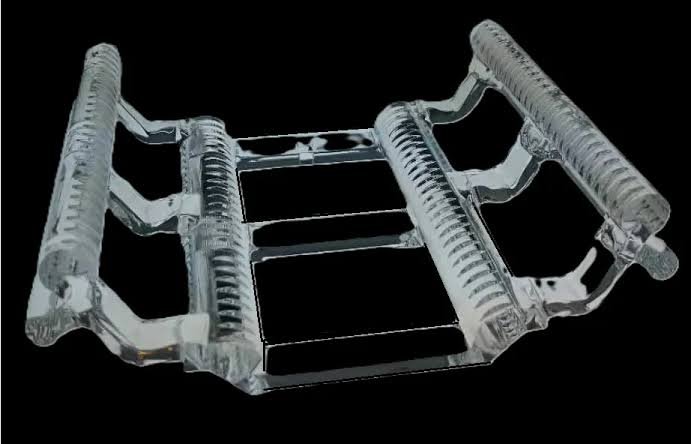
In modern industrial, laboratory, and high-tech manufacturing environments, the safe and efficient storage of liquids is a foundational requirement. Whether dealing with aggressive chemical reagents, ultra-pure water for semiconductor fabrication, or high-temperature melts, the choice of storage vessel dictates the success, safety, and cost-effectiveness of the entire operation. Among the various materials available, quartz has emerged as a premier material for specialized liquid containment. A Quartz Liquid Tank combines exceptional thermal resilience, extreme chemical purity, and remarkable mechanical stability, making it an indispensable asset across multiple high-performance industries.
Understanding the Unique Properties of Quartz
To appreciate why a Quartz Liquid Tank is so effective in demanding storage applications, it is essential to understand the material itself. Fused quartz is manufactured by melting high-purity silica sand (silicon dioxide, $SiO_2$). Unlike standard glass, which contains various additives like sodium, calcium, and aluminum oxides to lower melting points and ease manufacturing, high-purity quartz consists almost entirely of silica in an amorphous, non-crystalline structure.
This unique atomic composition grants quartz several extraordinary properties:
- Exceptional Purity: Quartz does not leach metallic ions or trace elements into stored liquids, ensuring that the contents remain uncontaminated.
- High Thermal Shock Resistance: Quartz possesses an extremely low coefficient of thermal expansion. This means a Quartz Liquid Tank can endure rapid, drastic temperature shifts without cracking or shattering.
- Superior Chemical Inertness: Quartz resists attack from almost all acids, organic solvents, and corrosive chemicals, with the notable exception of hydrofluoric acid and hot phosphoric acid.
- Optical Clarity: High-purity quartz is transparent to ultraviolet (UV), visible, and infrared light, allowing for visual inspection of liquid levels and reactions without opening the vessel.
Ensuring Absolute Safety in Corrosive and Hazardous Environments
Safety is the paramount concern in any facility handling aggressive liquids. Traditional metal containers can corrode, thin out, and eventually rupture when exposed to strong acids like hydrochloric, sulfuric, or nitric acid. Plastic containers, while resistant to certain chemicals, can degrade under UV exposure, warp at elevated temperatures, or leach plasticizers into high-purity contents.
A Quartz Liquid Tank eliminates these vulnerabilities entirely. Because quartz is chemically inert to the vast majority of industrial chemicals, it prevents dangerous chemical reactions between the container wall and its contents. This neutral barrier ensures that there is no risk of container degradation leading to catastrophic leaks, spills, or exothermic reactions. Furthermore, quartz is non-flammable and does not emit toxic fumes when exposed to high heat, adding a critical layer of fire safety to industrial floors and cleanrooms.
Containment of High-Purity Reagents
In industries such as semiconductor manufacturing, pharmaceutical formulation, and analytical chemistry, chemical purity is directly tied to product safety and efficacy. Trace metal contamination at the parts-per-billion (ppb) or parts-per-trillion (ppt) level can ruin an entire batch of microchips or invalidate pharmaceutical compounds.
When ultra-pure acids and solvents are stored in a Quartz Liquid Tank, the risk of leaching is virtually eliminated. The smooth, non-porous surface of fused quartz prevents particulate accumulation and bacterial growth, while its chemical stability ensures that the reagent inside remains as pure on the hundredth day of storage as it was on the first.
Driving Efficiency in Industrial and Laboratory Operations
Beyond safety, efficiency is a driving force behind the adoption of specialized storage systems. Operational efficiency encompasses temperature management, maintenance downtime, ease of monitoring, and longevity of equipment. A Quartz Liquid Tank optimizes each of these factors, delivering long-term value to plant managers and researchers alike.
Thermal Efficiency and High-Temperature Capabilities
Many chemical processes require liquids to be stored, heated, or reacted at elevated temperatures. Standard containers would deform, soften, or fail structurally under these conditions. Quartz, however, maintains its mechanical strength and dimensional stability at temperatures exceeding $1000^\circ\text{C}$ for continuous use.
This thermal endurance allows a Quartz Liquid Tank to be integrated directly into heating and annealing systems. Operators can apply external heating elements or place the tank within controlled thermal environments without worrying about material fatigue. This direct-heating capability reduces the need for secondary heat exchangers, streamlining the overall system architecture and conserving energy.
Reduced Maintenance and Extended Lifespan
Equipment failure leads to costly downtime, hazardous clean-up procedures, and production delays. The exceptional durability of a Quartz Liquid Tank translates to an extended operational lifespan. Because quartz resists corrosion, scaling, and chemical erosion, the tanks require far less frequent replacement than their metal or polymer counterparts.
Additionally, the non-stick, glass-like nature of quartz surfaces makes cleaning and sterilizing straightforward. Residues do not easily adhere to the walls, allowing for rapid turnaround between different batches or reagents. This ease of maintenance minimizes equipment downtime and maximizes facility throughput.
Key Applications Across Diverse Industries
The versatility of a Quartz Liquid Tank makes it a preferred solution in several specialized sectors where ordinary storage vessels fall short.
Semiconductor and Electronics Manufacturing
The microelectronics industry demands the highest levels of chemical purity and thermal control. During wafer etching, cleaning, and photolithography processes, delicate chemical baths must be held at precise temperatures without introducing any microscopic impurities. A Quartz Liquid Tank serves as the ideal vessel for high-purity wet bench processes, ensuring high manufacturing yields and reliable device performance.
Chemical Processing and Analytical Laboratories
In research laboratories and pilot-scale chemical plants, scientists frequently work with aggressive reagents and catalysts. A Quartz Liquid Tank provides a reliable, transparent, and inert environment for mixing, storing, and observing chemical reactions. Its optical clarity allows researchers to monitor color changes, precipitation, or fluid levels in real time, enhancing both safety and experimental control.
Optics and Photonics
The production of specialized optical glass, fiber optics, and laser components often involves melting and holding high-purity raw materials and dopants in liquid form. The optical transmission properties and thermal purity of a Quartz Liquid Tank prevent any contamination of the melt, ensuring the final optical products achieve maximum clarity and transmission efficiency.
Best Practices for Utilizing Quartz Storage Vessels
To maximize the safety and efficiency advantages of a Quartz Liquid Tank, proper handling and maintenance protocols must be observed. While quartz is exceptionally durable against chemical attack and heat, it remains a brittle ceramic material that requires careful mechanical management.
- Prevent Mechanical Impact: Avoid sharp blows, dropping heavy objects near the tank, or over-tightening mounting brackets, as localized stress concentrations can cause cracking.
- Control Thermal Shock Wisely: Although quartz handles thermal shock remarkably well compared to standard glass, extreme and instantaneous temperature changes from extreme cold to extreme heat should still be managed gradually when possible to prolong vessel life.
- Avoid Hydrofluoric Acid: Never store hydrofluoric acid (HF) or concentrated hot caustic solutions in a Quartz Liquid Tank, as these substances actively etch and dissolve silica.
- Inspect Regularly: Implement routine visual checks to ensure that fittings, seals, and support structures remain secure and free from mechanical stress.
Conclusion
The demand for safe, reliable, and contamination-free liquid containment continues to grow as industrial processes become more advanced and precision-driven. By bridging the gap between extreme chemical inertness, high-temperature resilience, and optical transparency, a Quartz Liquid Tank provides an unmatched solution for challenging storage requirements. Whether safeguarding sensitive semiconductor chemicals, withstanding rigorous thermal environments, or streamlining laboratory workflows, quartz storage technology remains a cornerstone of modern industrial safety and operational efficiency.
