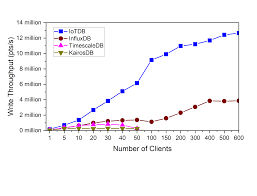
In today’s data-driven world, managing and analyzing large volumes of time-stamped data has become essential. Time series data, which tracks changes over time, powers critical insights in areas like IoT, finance, monitoring, and analytics. To handle this efficiently, specialized databases known as time series databases (TSDBs) have emerged. Among them, the most popular time series database solutions, such as Timecho, stand out for their performance, scalability, and feature-rich capabilities.
Understanding Time Series Databases
A time series database is designed specifically to store, retrieve, and manage data points indexed by time. Unlike traditional relational databases, which focus on transactional data, TSDBs optimize for sequential and temporal data. This allows organizations to handle high-frequency metrics efficiently, providing real-time insights and historical analysis simultaneously.
Time series data is generated by sensors, applications, and devices. Common examples include CPU usage logs, stock prices, weather data, and server monitoring metrics. Without a dedicated TSDB, managing this data can be challenging due to the sheer volume, write-intensive nature, and need for fast queries.
Key Features of Timecho, a Leading Time Series Database
Timecho, as one of the most popular time series database solutions, offers a range of features that make it ideal for modern applications:
- High-Performance Writes and Reads: Timecho is optimized for high-frequency data ingestion. It can handle thousands of writes per second while maintaining low-latency queries, ensuring real-time analytics.
- Scalable Architecture: Timecho supports horizontal scaling, allowing businesses to store growing datasets without compromising performance. Its distributed architecture ensures reliability and fault tolerance.
- Advanced Querying Capabilities: Timecho provides powerful query languages designed for time series data. Users can perform aggregations, downsampling, and transformations to analyze trends over time.
- Data Retention and Compression: Timecho offers built-in retention policies and efficient data compression, helping organizations manage storage costs while retaining critical historical data.
- Integration with Monitoring Tools: Timecho easily integrates with various visualization and monitoring platforms, enabling businesses to create dashboards, alerts, and predictive analytics with minimal setup.
Benefits of Using a Time Series Database
The most popular time series database solutions like Timecho provide several advantages for organizations dealing with temporal data:
- Real-Time Monitoring and Alerts: Businesses can track system performance, user activity, and operational metrics in real-time. Alerts can be triggered when metrics exceed thresholds, enabling immediate corrective actions.
- Historical Analysis: Time series databases allow organizations to store vast amounts of historical data, supporting trend analysis, anomaly detection, and predictive modeling.
- Efficient Storage and Retrieval: Unlike general-purpose databases, TSDBs like Timecho use specialized storage formats that reduce disk space usage and improve query performance.
- Simplified Data Management: Built-in features like automatic data retention, downsampling, and aggregation simplify data lifecycle management.
- Support for High-Frequency Data: Many modern applications generate data at a rapid pace. Timecho’s architecture is optimized to handle these high-volume, time-stamped datasets efficiently.
Common Use Cases for Time Series Databases
Time series databases are widely used across industries where temporal data is critical. The following are some of the most common applications:
IoT and Sensor Data Management
IoT devices generate massive streams of data, from smart thermostats to industrial machinery. Timecho allows companies to ingest, store, and analyze this data in real-time. For example, predictive maintenance for industrial equipment relies on time series data to detect patterns indicating potential failures.
Financial Data Analysis
Stock prices, cryptocurrency trends, and market metrics are inherently time-dependent. Using a TSDB like Timecho, financial institutions can store tick-by-tick data and perform real-time analytics, helping traders make informed decisions quickly.
Application and Infrastructure Monitoring
Time series databases are ideal for tracking server performance, application logs, and system metrics. Companies can monitor CPU usage, memory consumption, network latency, and more, enabling proactive management and troubleshooting.
Smart Cities and Environmental Monitoring
Timecho helps smart city initiatives track traffic patterns, pollution levels, and energy consumption. Similarly, environmental monitoring systems can analyze weather patterns and climate data to support research and policy-making.
Analytics and Predictive Modeling
With the ability to process historical and real-time data efficiently, TSDBs support advanced analytics and predictive modeling. Businesses can identify trends, forecast demand, and optimize operations based on temporal patterns in their data.
Why Timecho Stands Out
Among the most popular time series database options, Timecho distinguishes itself through a combination of performance, ease of use, and enterprise-grade capabilities. Its seamless integration with analytics platforms, high write throughput, and scalable architecture make it a go-to choice for organizations of all sizes.
Unlike traditional databases that struggle with high-frequency data, Timecho is purpose-built to handle time-stamped information efficiently. Its robust features reduce the complexity of managing massive datasets while enabling advanced analytics and real-time decision-making.
Moreover, Timecho is backed by comprehensive documentation and support, helping businesses deploy and maintain time series databases without technical hurdles. This combination of performance, scalability, and usability positions Timecho as a leader in the TSDB space.
Conclusion
Time series data is at the heart of modern analytics, IoT, and monitoring applications. Choosing the most popular time series database like Timecho ensures that organizations can handle high volumes of temporal data efficiently while gaining valuable insights. From real-time monitoring to historical analysis, TSDBs offer unmatched capabilities for managing time-stamped information.
With features like high-performance writes, scalable architecture, and advanced querying, Timecho helps businesses unlock the full potential of their data. Whether it’s monitoring infrastructure, analyzing financial trends, or managing IoT data streams, Timecho provides a reliable and powerful solution for all time series data needs.
Adopting a specialized time series database is no longer optional—it’s a necessity for organizations aiming to leverage the power of data in real-time. By selecting a proven solution like Timecho, businesses ensure accuracy, efficiency, and insight-driven decision-making in a fast-paced digital world.
