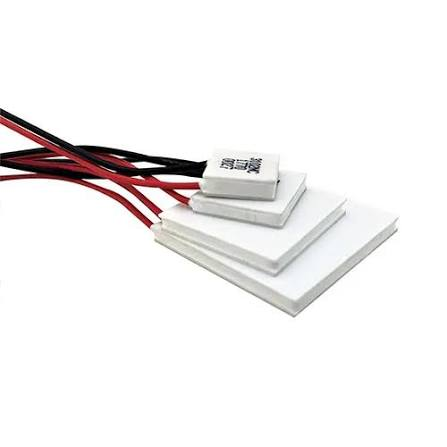
A TEC Chip is a compact thermoelectric device designed to transfer heat from one side of the chip to the other when electrical power is applied. Unlike traditional cooling TEC Chip systems that rely on compressors, refrigerants, and moving mechanical parts, thermoelectric cooling technology uses the Peltier effect to create a temperature difference. This makes TEC chips useful for applications that require precise, compact, and reliable temperature control.
From electronics and laser systems to medical instruments and portable cooling equipment, thermoelectric technology has become an important solution for modern thermal management. Understanding how a TEC Chip works, its benefits, limitations, and applications can help engineers and manufacturers choose the right cooling technology for their needs.
What Is a TEC Chip?
A TEC Chip, also known as a thermoelectric cooling chip or Peltier device, is a solid-state heat pump. It typically consists of semiconductor materials arranged between two ceramic plates. When direct current passes through the semiconductor elements, heat moves from one surface to the other.
The side where heat is absorbed becomes cold, while the opposite side releases heat and becomes hot. Reversing the direction of the electrical current also reverses the direction of heat transfer. This reversible characteristic makes thermoelectric cooling especially useful for applications that need both heating and cooling.
Unlike conventional cooling systems, a TEC Chip does not require refrigerant or mechanical compression. Its solid-state construction allows it to operate quietly while providing reliable temperature control.
How Does a TEC Chip Work?
The operation of a TEC Chip is based on the Peltier effect. When an electric current flows through two different semiconductor materials, heat is either absorbed or released at the junction between them.
A typical thermoelectric module contains many semiconductor couples connected electrically in series and thermally in parallel. These semiconductor elements are usually positioned between two ceramic plates. One ceramic surface becomes cold and absorbs heat, while the other becomes hot and transfers heat away.
For effective cooling, the hot side must be connected to a suitable heat sink or cooling system. If heat cannot be removed efficiently from the hot side, the temperature of the entire module can rise and reduce cooling performance.
The amount of cooling depends on several factors, including electrical current, voltage, heat load, ambient temperature, and the thermal management system attached to the hot side.
Main Components of a Thermoelectric Module
A thermoelectric module contains several important components that work together to provide cooling.
Semiconductor Elements
The semiconductor elements are the core of the module. They are responsible for moving heat when electrical current passes through them. High-quality semiconductor materials help improve cooling performance and efficiency.
Ceramic Plates
Ceramic plates provide electrical insulation and mechanical protection. They also create the flat surfaces needed to transfer heat between the TEC module and external components.
Electrical Connections
The semiconductor couples are electrically connected so that current can pass through the module. Proper electrical connections are essential for consistent operation and performance.
Thermal Interface Materials
Thermal interface materials may be used between the TEC Chip and heat sink or cooled object. These materials help reduce thermal resistance and improve heat transfer.
Advantages of TEC Chip Technology
Thermoelectric cooling offers several advantages compared with traditional cooling methods.
One major advantage is its compact size. A TEC Chip can provide cooling in applications where conventional compressors would be too large or impractical. Its small form factor makes it suitable for portable electronics, laboratory equipment, and compact temperature-control systems.
Another advantage is silent operation. Since thermoelectric modules have no compressor or fan inside the module itself, they can operate without mechanical noise. Additional fans or heat sinks may still be required for hot-side heat removal.
Reliability is another important benefit. A TEC Chip has no moving parts, which can reduce mechanical wear and maintenance requirements. With proper electrical and thermal management, thermoelectric modules can provide consistent performance for extended periods.
TEC technology also offers precise temperature control. By adjusting the supplied current, users can control the amount of heat transferred through the module.
Common Applications of TEC Chips
TEC Chips are used across many industries because of their compact design and controllable cooling capabilities.
Electronics Cooling
Electronic components can generate significant amounts of heat during operation. TEC modules can be used to provide localized cooling for sensitive components, sensors, processors, and other electronic systems.
Laser and Optical Equipment
Laser diodes and optical devices often require stable operating temperatures. A TEC Chip can help maintain consistent temperatures and improve the stability and performance of sensitive optical equipment.
Medical and Laboratory Equipment
Thermoelectric technology is frequently used in laboratory instruments, diagnostic equipment, sample storage systems, and temperature-controlled devices. Precise temperature management can be essential for maintaining reliable testing conditions.
Food and Beverage Cooling
Small thermoelectric cooling systems can be used in portable coolers, compact refrigerators, beverage systems, and other low-capacity cooling applications.
Automotive Applications
TEC modules can also be incorporated into automotive temperature-control systems. They may be used for cooling seats, electronic components, sensors, and specialized compartments.
Factors to Consider When Choosing a TEC Chip
Selecting the correct TEC Chip requires careful consideration of the application’s thermal requirements.
Cooling capacity is one of the most important specifications. The module should be capable of handling the expected heat load without operating beyond its recommended limits.
Maximum temperature difference is another important specification. Different TEC modules can produce different temperature differentials between their cold and hot sides.
Electrical requirements should also be considered. Voltage, current, and power consumption need to match the available power supply and system design.
The physical dimensions of the module are equally important. The TEC Chip must fit properly within the available installation space while providing suitable contact with the heat source and heat sink.
Importance of Heat Dissipation
Although a TEC Chip can move heat from one surface to another, it does not eliminate heat. Instead, it transfers heat from the cold side to the hot side while also generating additional heat due to electrical power consumption.
This makes hot-side heat dissipation extremely important. A properly sized heat sink, fan, liquid cooling system, or other thermal management solution may be required.
If the hot side becomes too warm, the cold side may also increase in temperature. Therefore, the overall performance of a thermoelectric cooling system depends not only on the TEC module but also on the quality of the surrounding thermal design.
TEC Chip vs. Traditional Cooling Systems
Traditional refrigeration systems commonly use compressors and refrigerants to transfer heat. These systems can provide high cooling capacity and efficiency for large-scale applications, but they may require more space and mechanical components.
A TEC Chip offers a different approach. It provides compact, solid-state cooling without refrigerant or mechanical compression. This makes it particularly attractive for small-scale applications requiring accurate temperature control.
However, thermoelectric cooling can be less energy-efficient than conventional refrigeration in some applications. For this reason, TEC technology is generally most effective when compact size, precision, reliability, and localized cooling are more important than maximum cooling efficiency.
Future of Thermoelectric Cooling Technology
As electronic devices become smaller and more powerful, thermal management continues to become increasingly important. Thermoelectric technology has potential for applications involving sensors, wearable electronics, advanced optical systems, data centers, automotive electronics, and specialized industrial equipment.
Ongoing research into semiconductor materials and module design may improve the efficiency, cooling capacity, and operating temperature range of future TEC products. Manufacturers are also developing more specialized thermoelectric solutions for precise temperature-control requirements.
Conclusion
A TEC Chip is a versatile solid-state cooling solution based on the Peltier effect. Its compact construction, silent operation, precise temperature control, and lack of moving parts make it valuable across electronics, medical equipment, optical systems, automotive technology, and portable cooling applications.
Choosing the right TEC Chip requires attention to cooling capacity, temperature difference, electrical specifications, dimensions, and hot-side heat dissipation. While thermoelectric cooling may not replace conventional refrigeration in every situation, it provides an excellent solution for applications where compact and reliable temperature control is essential. As thermal management requirements continue to grow, TEC technology is likely to remain an important part of modern cooling system design.
