Static images alone are no longer enough to capture attention in a crowded e-commerce market. That’s why more sellers are pairing an AI product video generator with their existing AI product photography workflow to create a complete, scalable content strategy — one that covers everything from product pages to social media ads, without a camera crew or editing software.
What Is an AI Product Video Generator?
An AI product video generator is a tool that uses artificial intelligence to turn static product images into dynamic, engaging videos — often adding motion like rotation, zoom, or lifestyle-scene animation, without requiring any actual filming. The AI analyzes an uploaded product photo and generates realistic movement and transitions, drawing on models trained to understand depth, lighting, and natural motion patterns.
Because most AI product video generators only require a static image as input, they’re far more accessible than traditional video production. The resulting videos work well for social media ads, Shopify product pages, TikTok and Instagram Reels, and video-supported marketplace listings. Many brands now use AI-generated product videos directly in paid social campaigns thanks to their professional look and fast turnaround time.
Why Pair Video with AI Product Photography?
Photography and video serve different purposes in the buyer journey — images communicate details quickly, while video builds engagement and emotional connection. Using both creates a more complete, persuasive product presentation. Product pages that include both high-quality images and short videos tend to see higher engagement and longer time-on-page, both of which are associated with improved conversion rates.
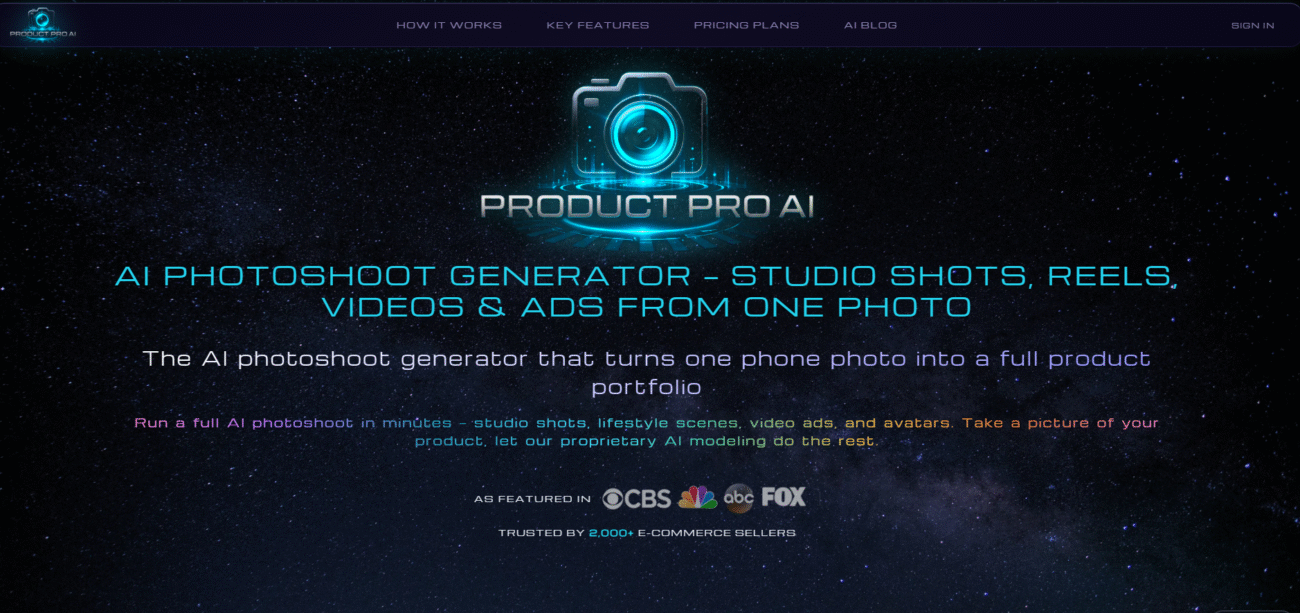
In many cases, a single high-quality product photo can be used both to generate polished still images and as the starting point for an animated video, maximizing the value of one good source image. This is exactly the type of workflow AI tools are designed to support. Instead of separate photography and videography budgets, small stores can produce both from a single, affordable AI-powered platform like ProductProAI, while keeping their visual branding consistent whether a customer sees a still image or a video ad.
Getting Started with AI Product Video Generation
The process starts with a clear, well-lit product photo — the same quality standard used for AI product photography — since the animation quality depends heavily on the source image. That photo is then uploaded to the platform, a video style or template is chosen, and the AI generates the animated video within a few minutes.
Most AI video tools allow branding elements like captions, background music, and logo overlays to be added before exporting the final video. Short-form videos, typically between 6 and 15 seconds, tend to perform best on platforms like Instagram Reels and TikTok, and the entire process from photo to finished video usually takes just a few minutes, compared to the days or weeks a traditional video shoot and edit might require.
Comparing AI Video Generation to Traditional Production
Hiring a professional videographer still offers full creative control, live-action footage, and the ability to capture unique brand storytelling that AI can’t yet fully replicate. However, an AI product video generator wins clearly on speed and affordability — a finished video can be created in minutes for a fraction of what a professional shoot would typically cost.
For routine product listings and social ads, AI-generated video offers a much better return on time and budget than commissioning individual video shoots for every product. Traditional video production still makes sense for flagship campaigns, testimonials involving real customers, or storytelling-heavy brand content, where it continues to hold a creative edge.
Common Questions and Concerns
Modern AI video tools are built specifically to avoid an artificial look, producing smooth, realistic motion that closely resembles professionally filmed content. Sellers generally retain full usage rights over videos generated from their own product images, though platforms like ProductProAI should always be checked for their specific licensing terms.
The most common reason AI-generated videos look low quality is starting with a poor-quality source photo — blurry, low-resolution, or poorly lit images limit what the AI can produce in the final animation. Many platforms offer free trials or limited free credits, allowing sellers to evaluate output quality before committing to a paid plan. This entire workflow, from photography to video, is also designed to scale, supporting bulk processing for stores with large or rapidly growing catalogs.
Final Thoughts
Combining a strong AI product photography workflow with an AI product video generator gives sellers a complete, scalable content system — covering everything from product page images to short-form video ads — without the cost and complexity of traditional production. For most online sellers in 2026, this pairing has become one of the most efficient ways to compete visually in a crowded market.
